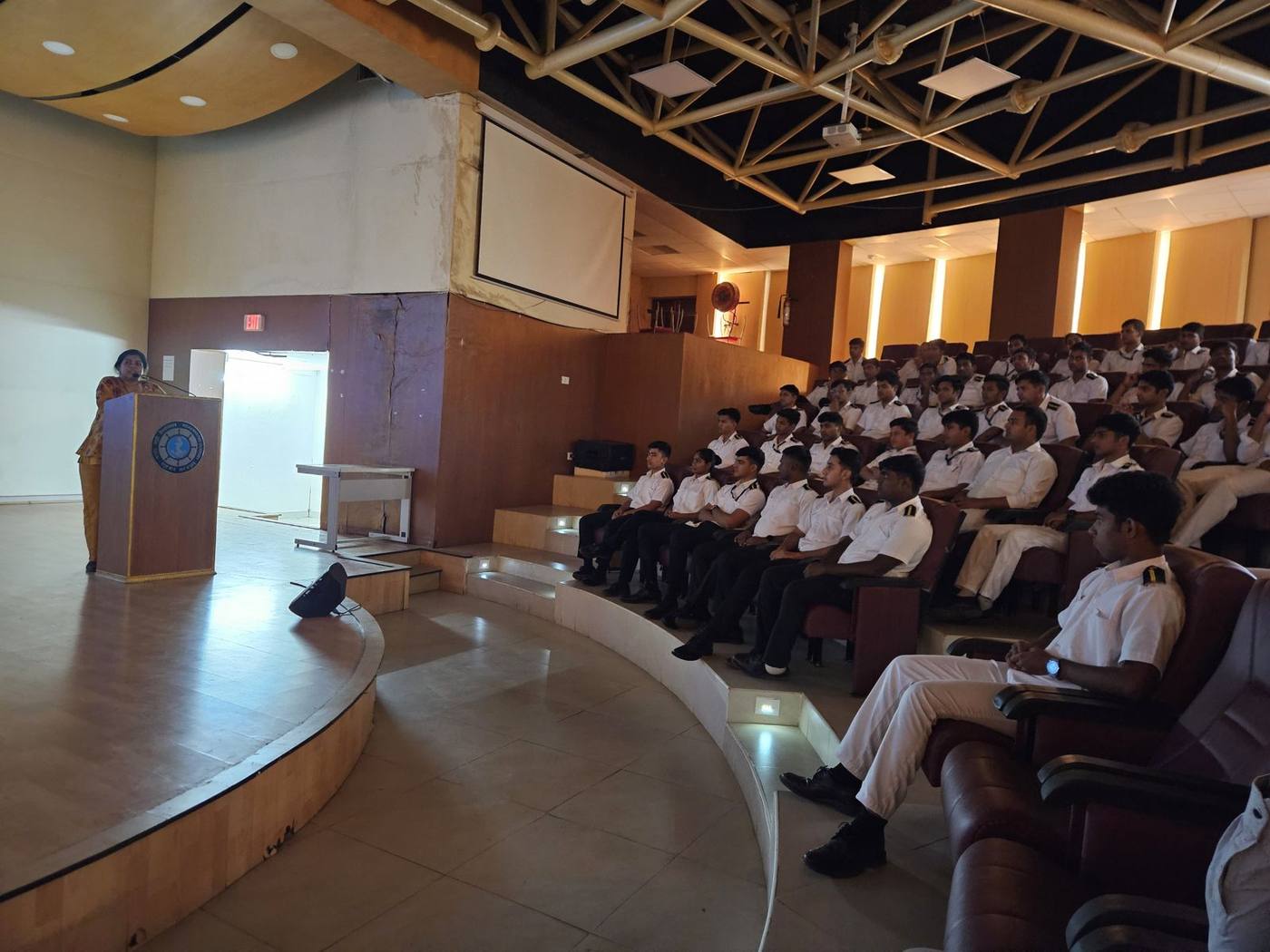
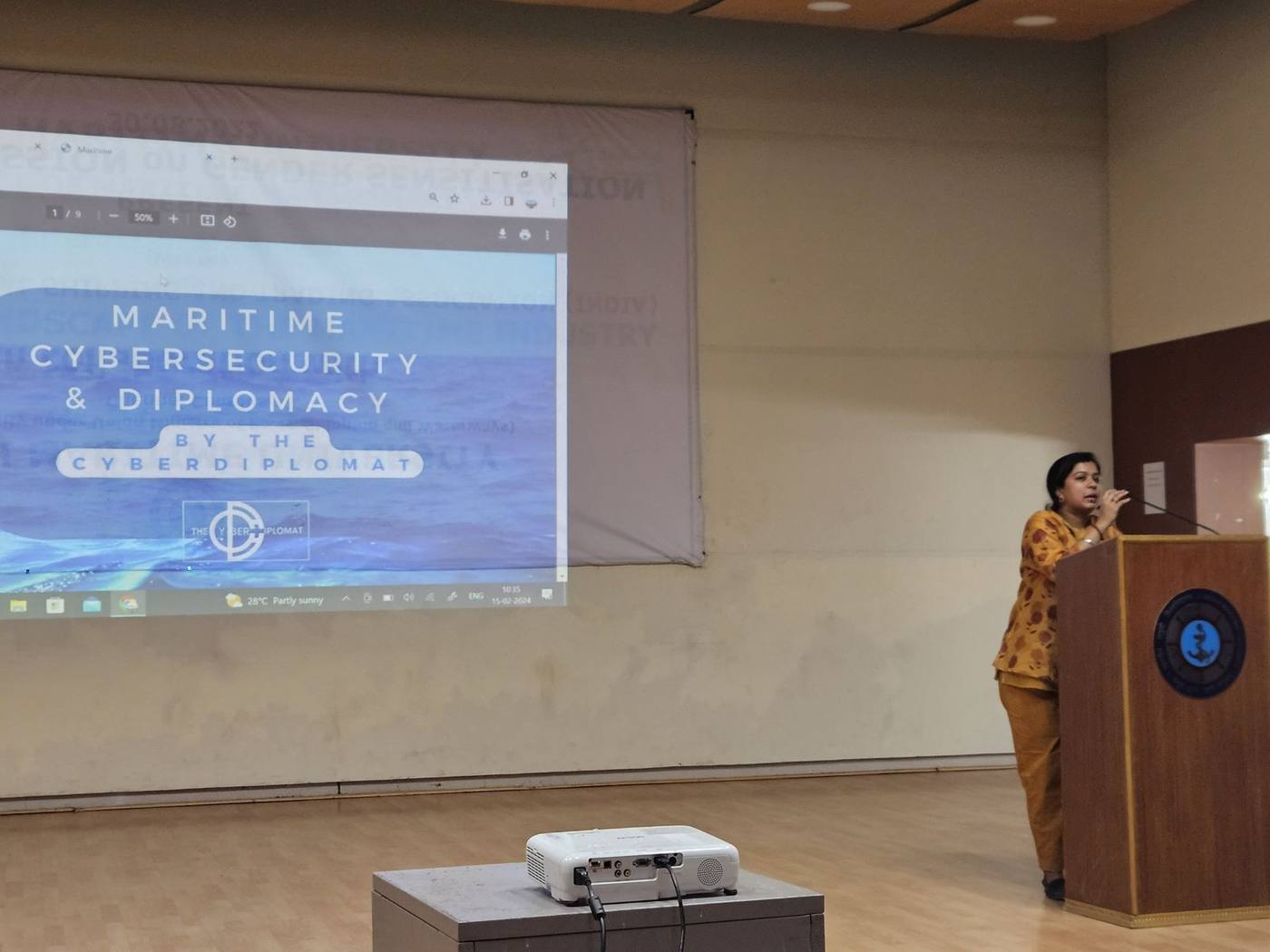
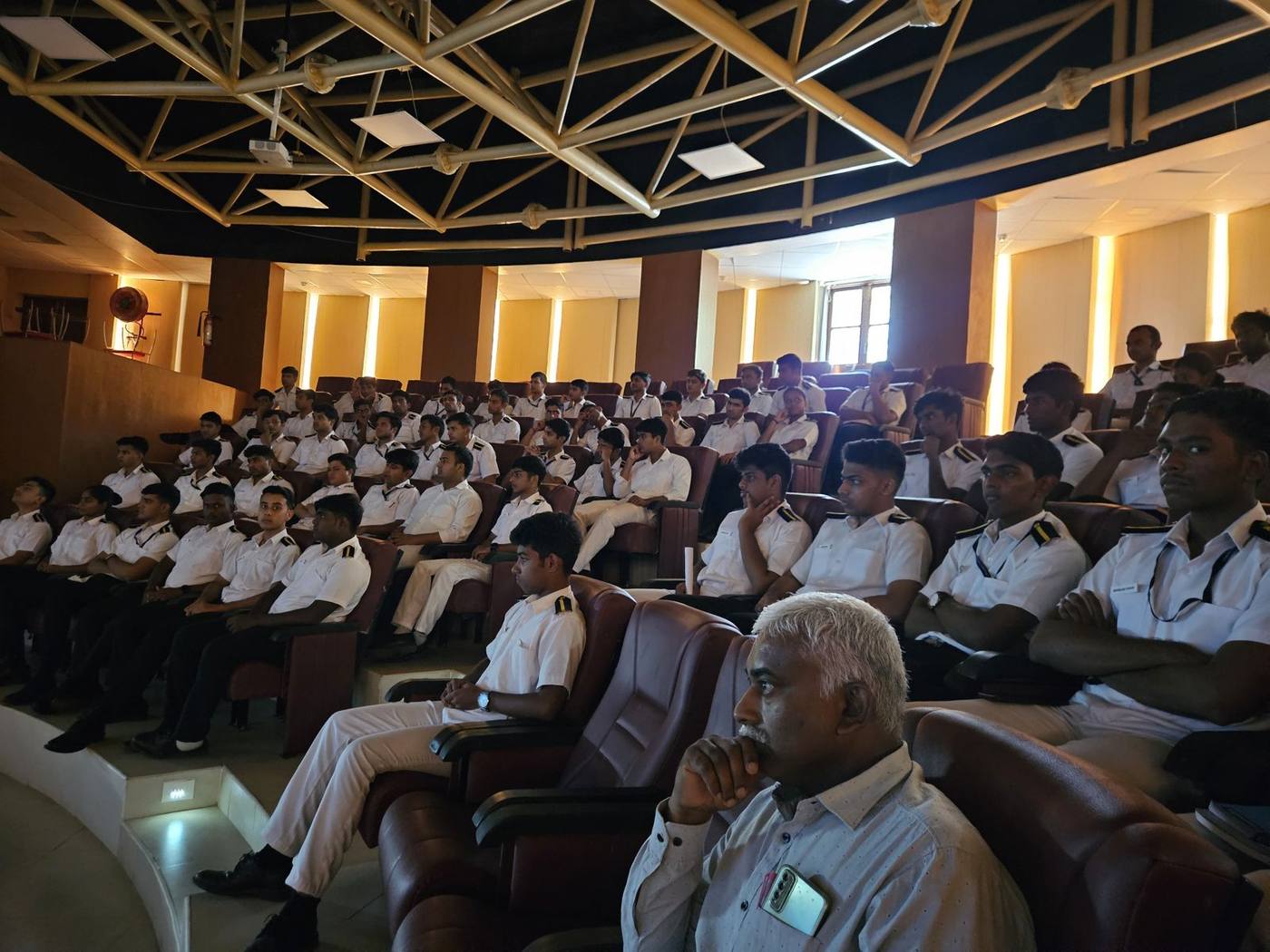
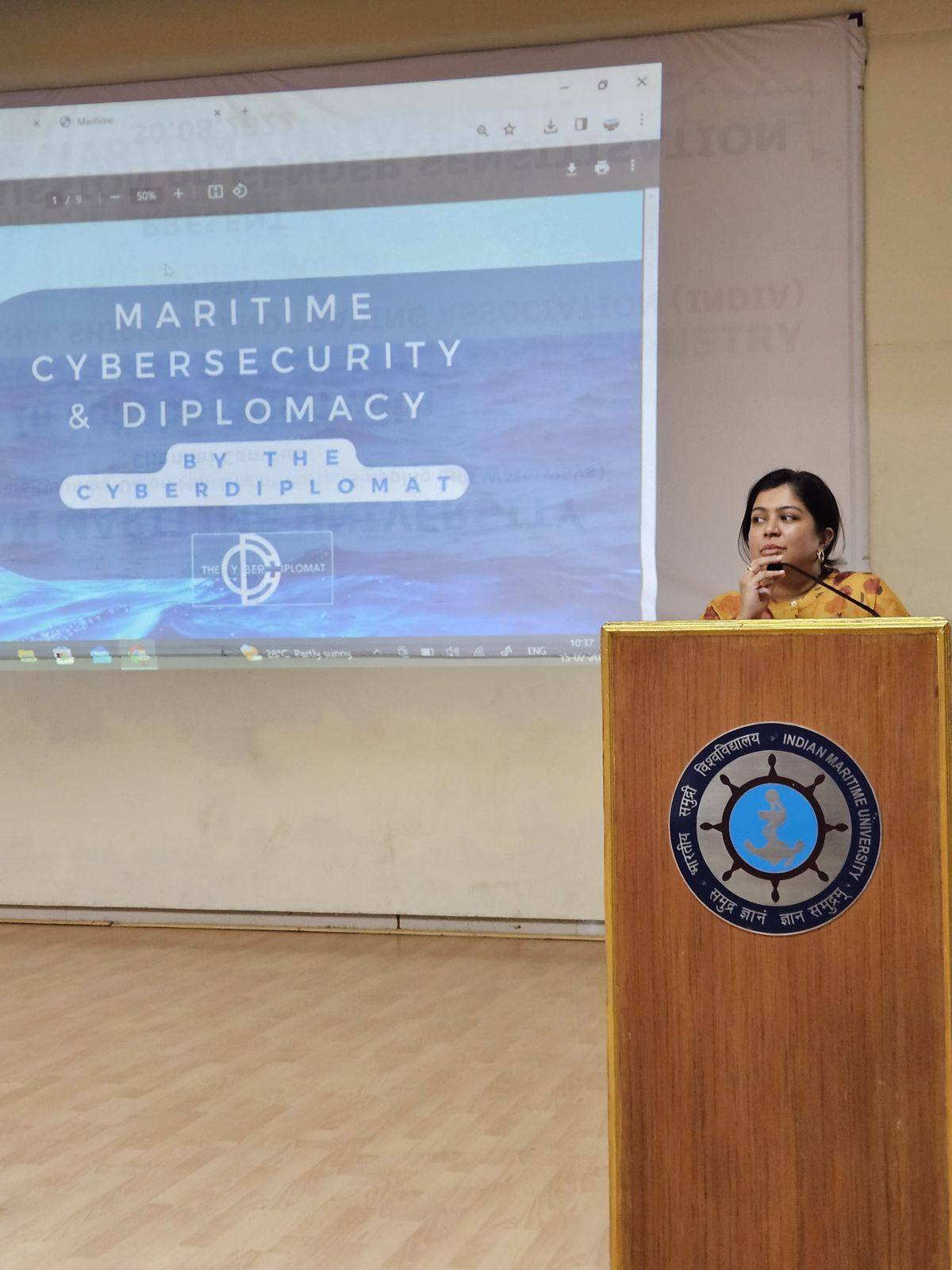
On 15 February 2024 I had the privilege of addressing the cadets of the Indian Maritime University (IMU) in Chennai on a subject that sits at the meeting point of two worlds: maritime cybersecurity and cyberdiplomacy. The session was designed to build awareness and to spark interest in a field that the next generation of mariners will be living with every day of their careers.
Why the sea is now a cyber domain
A modern ship is a floating network. Navigation, propulsion, cargo handling, ballast control and communications all rely on connected systems, and so do the ports, terminals and logistics providers a vessel depends on. The people in that auditorium will be the officers operating those systems, which makes them the first line of defence long before any security team gets involved.
Supply chain: one weak link is enough
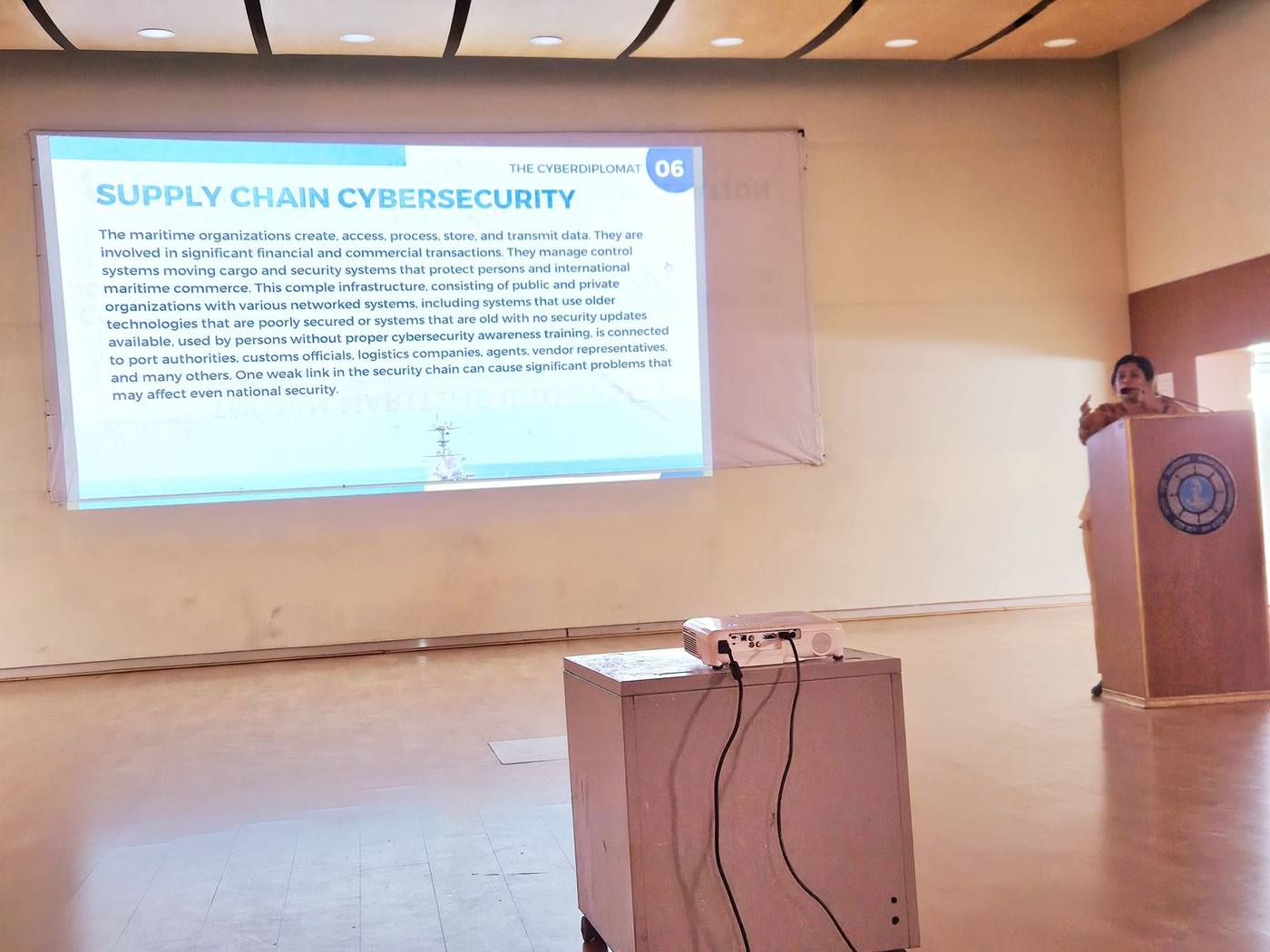
A central theme of the lecture was the maritime supply chain. Maritime organisations create, process, store and transmit enormous amounts of data, carry out significant financial and commercial transactions, and run the control systems that move cargo and protect people. That infrastructure links public and private organisations, including port authorities, customs officials, logistics companies, agents and vendor representatives. Much of it runs on older technology that is poorly secured or no longer receives security updates, and it is often operated by people who have never had proper cybersecurity awareness training.
One weak link in the security chain can cause significant problems — problems that may even affect national security.
Where diplomacy comes in
Shipping is international by nature. A single voyage can involve a vessel flagged in one country, owned in another, crewed from several more and calling at ports across different jurisdictions. When a cyber incident crosses those boundaries, technical fixes alone are not enough: it takes cooperation between states, regulators and industry, shared norms of responsible behaviour, and people who understand both the technology and the diplomacy. That is the space cyberdiplomacy occupies, and it is why I wanted these future officers to see cybersecurity as more than an IT problem.
Building awareness early
The aim of the session was simple: to make sure that cyber risk is part of how these cadets think about seamanship from day one. Awareness is the most cost-effective control any organisation has, and it is far easier to build good habits at the start of a career than to correct them later at sea.
My sincere thanks to the Indian Maritime University for the invitation and to the cadets for their attention. It was encouraging to see so much interest in a domain that will shape the future of the maritime industry.
Bring this session to your organisation
We deliver awareness lectures, workshops and certified training for universities, government bodies and industry.
Talk to us Maritime Cybersecurity training